


Doctorate degrees are notoriously difficult to complete and achieve. They require careful thought to develop their direction based on background knowledge, design the methodology, collect data and, of course write the thesis upon which you’ll be examined. To successfully achieve advanced research for a doctorate will need you to dedicate a significant amount of time (years). Paradoxically, what’s involved in doctoral studies has the least amount of structure and guidance.
Learning and progression frequently occurs by a combination of ‘trial and error’ and intuition of what will work. Though supervisors play their part, much of the responsibility rests with the individual carrying out the research (the student).
A doctorate is not about passing exams or completing pre-determined coursework, though some programmes include preparatory coursework. Rather, a student will be expected to frame a research problem or hypothesis. They’ll need to read a tremendous amount of the relevant literature. This will enable them to develop a workable thesis proposal which will be followed by carrying out extensive research.
Finally, you’ll be required to write an extensive thesis (normally 50-80,000 words) consistent with academic standards. Critically, the thesis and viva voce (oral examination) must satisfy the examiners consisting, usually, of at least two examiners. The whole process is largely self-paced with minimal control points beyond regular meetings with supervisor(s) and institutional review.
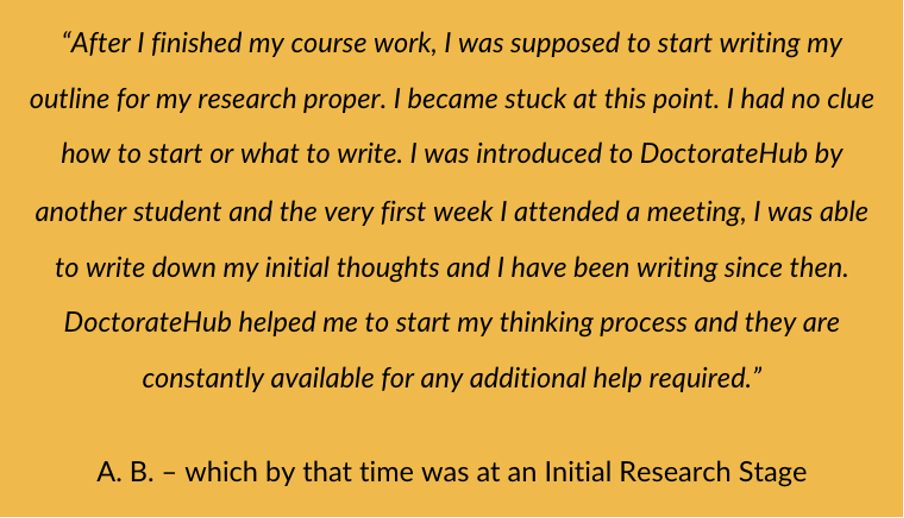
It’s reasonable to say that completing a doctorate is complex and dynamic. Students frequently feel they’re in ‘uncharted territory’ and believe themselves to need assistance. Obtaining guidance throughout the doctoral journey is definitely worth considering. This is not just the viewpoint of the DoctorateHub team. This is the testimony of a member of our community.
Getting through the doctoral journey step-by-step
Thesis coaches, also known as mentors or advisors, are critical to doctoral candidates’ success. Their advice and expertise are invaluable in shaping and refining the way in which research to achieve a thesis is carried out from the outset to eventual completion and submission. Here’s why they’re so important during this academic journey:
- Expertise and Knowledge Sharing: Benefit from a wealth of experience and expertise. Gain direct access to invaluable knowledge providing students with perspectives and insights that go beyond textbooks.
- Clarifying Objectives and Expectations: A thorough understanding of the objectives and expectations is critical to the success of a doctoral thesis. These objectives are enhanced and clarified with assistance from thesis coaches who ensure adherence to academic standards.
- Milestone Guidance: It’s critical to divide the daunting task of writing a thesis into manageable elements and to set achievable milestones that will stretch yourself but not over-ambitious. Assistance in formulating and setting attainable goals that’ll enable you to maintain momentum and motivation is key to success.
- Constructive Feedback: Constructive criticism is the foundation of academic growth. Obtaining timely and insightful feedback will undoubtedly improve your research, writing, and analytical skills.
- Moral and Emotional Support: The doctoral journey will be characterised by doubt and frustration. Receiving emotional support to overcome what will frequently feel like insurmountable challenges, is vital to fostering resilience and determination.
- Networking Opportunities: Be part of an extensive professional network and connect with experts in your respective discipline. This will provide opportunities for collaboration and exposure to alternative points of view.
- Accountability and Discipline: Regular meetings and discussions instil discipline and will motivate you to complete tasks and write chapters on time.
Why not engaged with our GSBM DoctorateHub faculty?
The GSBM DoctorateHub faculty will allow you to discover and understand the various paths of the research journey. It will also allow you to locate yourself and your work within the doctoral journey. This is important and distinct from supervision in that it allows you to appreciate what’s happening now and what’s likely to happen next. It will allow you to become aware of obstacles and overcome them. This will reduce the potential for procrastination and doubt which is often the reason students decide to drop out.
If you consider getting a thesis coach to provide you with step-by-step mentoring through your doctoral journey, then check out our Research Support Programme.